
How to Grow a Small Fashion Brand Using Technology
By SartorFit · November 25, 2024
The Future of Fashion: Why Independent Designers Will Win with AI, Systems, and Community
By Taiwo Popoola
Founder & CEO, SartorFit
The Great Fashion Debate
Is the future of fashion owned by big luxury brands or independent digital designers?
The short answer: it depends.
But here is the longer, more honest answer.
Big luxury brands currently have an overwhelming advantage. They have the capital, the supply chains, the retail networks, and the brand equity built over decades or even centuries. With AI tools, they can amplify their already dominant presencepredicting trends with unprecedented accuracy, optimizing inventory management, forecasting demand, and automating marketing at scale. Every point of weakness they once had is now being covered by AI.
However, this is not all bad news for the small business.
This is also the era of the small business—as long as they do it right. AI favors creativity over brute force. It rewards agility over bureaucracy. And that is exactly where small brands can win.
The New Rules of Fashion Competition
For decades, fashion competition followed a predictable pattern. Big brands had bigger budgets, bigger factories, and bigger marketing campaigns. They won by outspending everyone else.
AI changes that equation.
Big businesses are not used to moving on a whim. They are built for scale, not speed. They have layers of approval, legacy systems, and institutional inertia. Small brands can maneuver. They can pivot. They can experiment. And with the right technology and marketing tools, they can move faster than the giants.
The generative AI in fashion market is valued at $127.7 million in 2025 and is projected to grow at a CAGR of 30.2% to reach $1.36 billion by 2034. This growth is not being driven by luxury conglomerates alone. It is being driven by accessibility—the democratization of tools that were once available only to the largest players.
AI does not just inspire creativity; it brings clarity. By analyzing sales data, market signals, promotions, and even weather patterns, AI in fashion retail can accurately forecast demand. This can help fashion businesses reduce overstock, prevent stockouts, and optimize production.
The Opportunity Big Luxury Cannot Easily Capture
Big luxury has the advantage. But advantage is not destiny.
Made-to-measure is becoming the new luxury. Ready-to-wear is commoditizing. Fit issues are the number one reason for returns in fashion ecommerce, and returns are a profit killer. The AI-driven virtual fitting room lowers return rates by 40% by providing precise estimation of 3D body measurements and customized avatars.
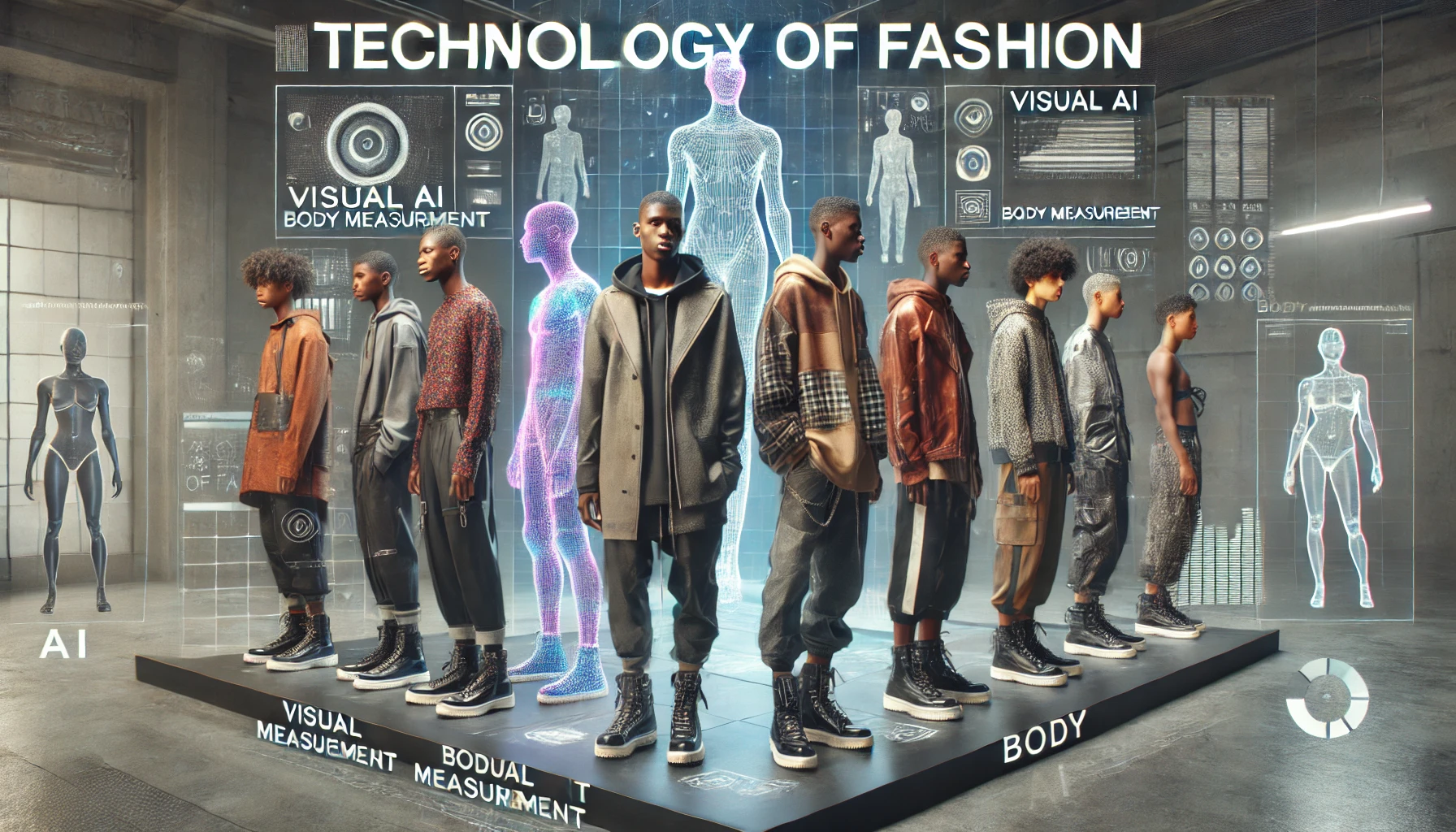
SartorFit is pioneering this space with our body measurement AI. The technology enables accurate sizing from a smartphone camera, reducing returns from 80% to under 15%. Our team has worked tirelessly to integrate AI-powered measurement tools, 3D modeling, and sustainable production methods.
Big fashion businesses cannot just offer made-to-measure at scale without the right infrastructure. Doing so would put them in the same problem Google faced with implementing AI without the right ecosystem, risking cannibalization of their core business. Google chose to evolve. Luxury groups like LVMH face the same dilemma: how to adopt AI without disrupting what already works.
This is where new brands and solo entrepreneurs should be targeting.
Small brands can offer handmade, made-to-measure garments with higher margins and lower competition. They can build direct relationships with customers. They can deliver the personal experience that mass luxury cannot replicate.
The Micro-Influencer Revolution
One of the most underrated opportunities in the AI era is the rise of the micro-influencer.
A chain of 100 micro-influencers each with 10,000 to 500,000 followers can outperform a single mega-influencer with millions of followers. Why? Because micro-influencers have higher engagement, more trust, and more authentic connections with their audiences.
The data is clear: Nano-influencers achieve the highest overall engagement rate at 2.53%, while mega-influencers average only 0.92%. Nano-influencers can reach engagement rates as high as 6-10%, compared to micro-influencers' 3-5% and macro-influencers' sub-2% performance.
AI makes it easier to identify, manage, and collaborate with these micro-influencers at scale. According to the Influencer Marketing Benchmark Report 2025, the industry has reached a staggering $32.55 billion valuation, with over 80% of marketers confirming influencer marketing as a highly effective strategy. Nano-influencers now account for 75.9% of Instagram's influencer population, demonstrating an unprecedented shift toward smaller, more engaged communities.
AI favors creativity and authenticity over reach. That is good news for independent designers.
The Business-in-a-Box Solution
This is where SartorFit and LolaGuild enter the picture.
We believe the future employee becomes an owner. The businesses that win will not just work harder. They will operate smarter. That is why we built LolaGuild—a business-in-a-box ecosystem designed to give creators, entrepreneurs, and future founders access to the systems, tools, automation, and infrastructure needed to build something real.
What is a Business-in-a-Box?
It is a complete business operating system that gives fashion entrepreneurs everything they need to run, grow, and scale their brand—all in one place. No more disconnected tools. No more chaos. No more building alone.
LolaGuild combines:
Lola365 – Enterprise-grade business operations (inventory, sales, CRM, accounting, manufacturing, POS)
RoseHub – AI-powered social media management
Design Media – AI tools for professional visuals
Lola Print – Enterprise printing with guild pricing
SartorGuide AI – Body measurement AI to reduce returns from 80% to under 15%
Business Quests – Gamified growth from E Rank to S Rank
Guild Community – Connection with other fashion founders and mentors
You do not need to figure out everything alone anymore. One system. One ecosystem. One place to build.
Gamified Business: The E Rank to S Rank Framework
One of the most powerful aspects of LolaGuild is the gamified business system.
Most business tools are boring. Dashboards. Spreadsheets. Endless to-do lists. They feel like work. Because they are work.
Gamification changes that.
When you treat business growth like a game, something shifts. Suddenly, you are not doing tasks. You are completing quests. You are not tracking metrics. You are earning XP. You are not struggling. You are leveling up.
The E Rank to S Rank framework:
E Rank: Simple tasks. Complete your brand profile. Set your pricing formula.
D Rank: Beginner quests. Track your time. Identify your most profitable product.
C Rank: Standard jobs. Document your production workflow. Raise your prices.
B Rank: Professional tasks. Outsource one non-creative task. Create SOPs.
A Rank: Expert missions. Develop a second revenue stream. Build a small team.
S Rank: Legendary challenges. Secure enterprise partnerships. Build a leadership team.
This is not a gimmick. This is psychology. Games are designed to keep you engaged without burning you out. They give you clear goals. They give you immediate feedback. They celebrate small wins. They show your progress.
The fashion industry is increasingly adopting gamification. Research shows that fashion brands implementing gamification should seek to stimulate pleasure and fun to provoke positive consumer responses. Fast-fashion brands prioritize accessibility and gamified experiences on platforms like Roblox, while luxury brands focus on exclusivity.
Closing the Gap
Wall Street has made a directional call on agentic commerce. Payments infrastructure is being rebuilt. Consumer behavior has already shifted.
The merchants who will capture the agentic traffic being priced into these platform valuations are the ones who close the gap between what the platform promises and what their own storefront actually delivers.
SartorFit is positioned to lead for three reasons:
1. Fashion-First AI Infrastructure
Most AI commerce tools are built for general retail. They treat a dress like a toaster. SartorFit understands that fashion discovery is fundamentally different. It is about color, texture, silhouette, fabric drape, fit, and style—not just keywords and categories.
2. Closing the Merchant Readiness Gap
The gap between platform capability and merchant reality is exactly where LolaGuild operates. While platforms raise the ceiling, LolaGuild raises the merchant floor. It gives fashion brands the AI tools they need to compete—trimodal discovery, natural language search, visual commerce surfaces, and catalog legibility for AI agents.
3. Community Commerce
The agentic commerce shift is not just about technology. It is about network effects. LolaGuild's guild structure connects fashion founders, manufacturers, suppliers, and retailers into an intelligent business community. When AI agents start shopping, they will favor brands that are machine-readable and connected.
The Path Forward for Independent Designers
If you are a small fashion brand or an independent designer, here is how you compete:
Use the right tools. You do not need to be everywhere. Pick 2 to 3 platforms and master them. Use tools like RoseHub for social media management, Lola365 for business operations, and SartorGuide AI for body measurement and return reduction.
Speak the language of each platform. Instagram is visual. LinkedIn is professional. TikTok is authentic. Tailor your content to each platform. Use real people in front of your brand. Authenticity wins.
Focus on made-to-measure. Target the market that big luxury cannot serve at scale. Handmade, custom-fit garments can fetch higher margins and build deeper customer loyalty.
Build community. Big luxury has brand recognition. Small brands have relationships. Use guilds, mentorship, and community to grow alongside other founders.
Leverage AI for creativity, not just efficiency. Use AI to handle the repetitive work—scheduling, analytics, content generation—so you can focus on design, storytelling, and connection.
Conclusion: The Future Belongs to the Nimble
Big luxury has the advantage. But advantage is not destiny.
The AI era favors creativity, agility, and authenticity over scale and legacy. Small brands that use the right tools, build real relationships, and focus on the opportunities big business cannot easily capture will not just survive—they will define the next generation of fashion.
The future of fashion is not owned by any one group. It is built by those who adapt.
At SartorFit, we believe the future of fashion begins with imagination but is built on intelligence. That is why we are building LolaGuild—a business-in-a-box ecosystem that gives fashion entrepreneurs the systems, tools, automation, and infrastructure needed to build something real.
The businesses that win will not just work harder. They will operate smarter.
The future of fashion is not just about what you wear. It is about how intelligently your business works.
One quest at a time.
About the Author
Taiwo Popoola is the Founder and CEO of SartorFit, a technology company building the future infrastructure of fashion business. SartorFit's flagship product, LolaGuild, is an AI-powered business growth platform that helps fashion brands replace hustle with systems, level up from E Rank to S Rank, and grow through quests, guilds, and AI-powered tools.
SartorFit is a certified Microsoft AI Partner, a certified NVIDIA Partner, and integrates with Red Hat open-source technologies. LolaGuild is live on the Microsoft Commercial Marketplace (Azure Marketplace).
Resources & Links
SartorFit Official Website – Discover our AI infrastructure for fashion.
LolaGuild Business-in-a-Box – Start, run, and scale your fashion brand with AI.
SartorGuide AI Body Measurement – Reduce returns from 80% to under 15%.
Get LolaGuild on Microsoft Marketplace – Available now on Azure.
References
SartorFIT. (2024). Merging Fashion & Technology: Lessons from the Frontlines. LinkedIn.
SartorFIT. (2025). In the world of AI, we believe the future employee becomes an owner. LinkedIn.
Fibre2Fashion. (2025). How to Use AI for Micro & Nano-Influencer Marketing in 2025.
DHL. (2025). The power of AI in redesigning the entire fashion lifecycle.
Research and Markets. (2025). Generative AI in Fashion Market Outlook 2025-2034.
HypeAuditor. (2025). Tracking the impact of nano, micro, and mid-tier creators on audience engagement.